


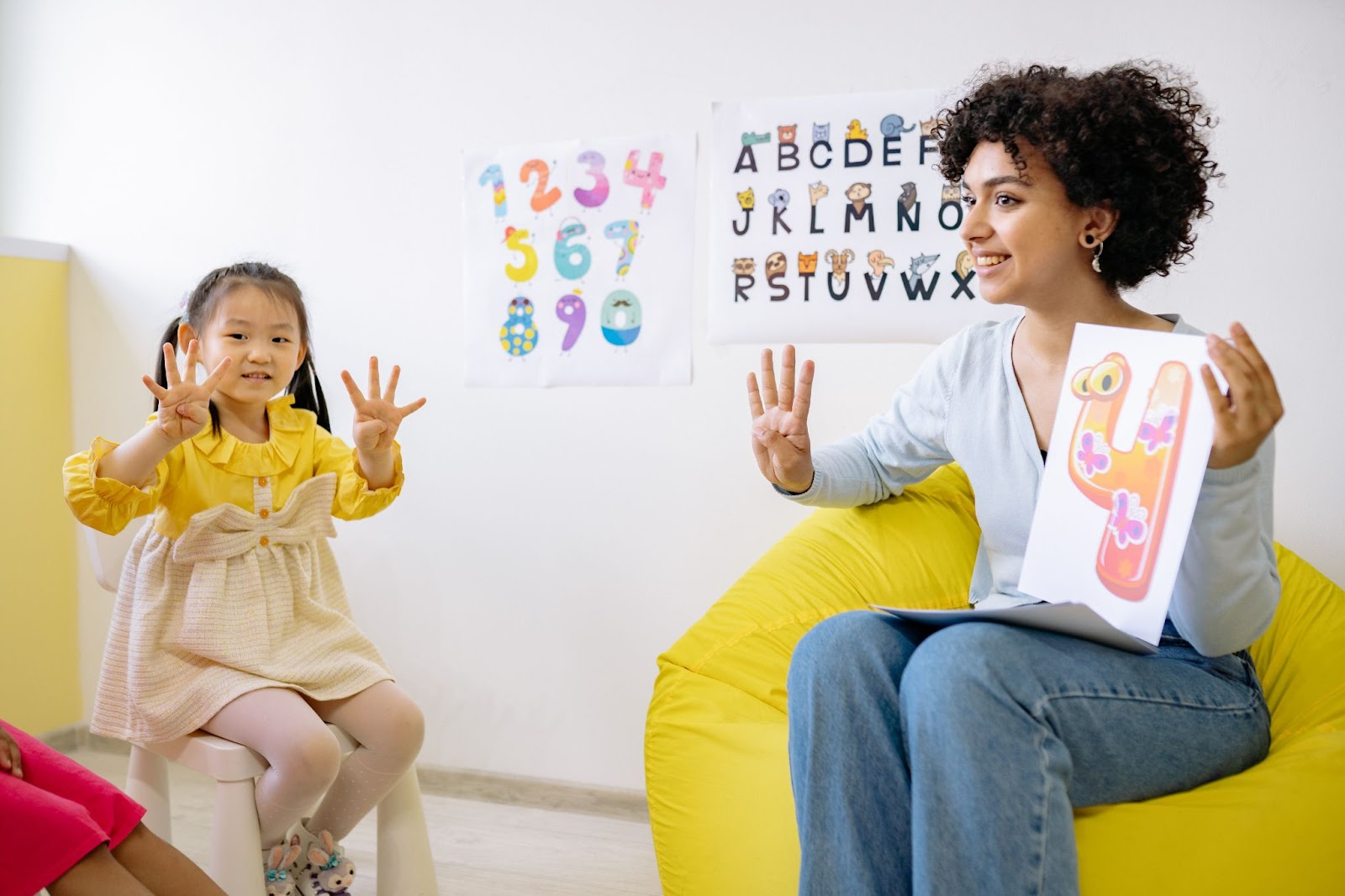
The Golden Age: 2 to 7 Years
During this period, a child’s brain naturally has an extraordinary ability to learn languages. It’s exactly the same stage when they are acquiring their mother tongue.
Children under 7 can learn a second language almost like their first—without translation and with native-like pronunciation.
Why Is Learning English in Childhood Better
Explanation
Children who know two languages have a more active memory, greater creativity, and stronger problem-solving skills.
Advantages
رشد شناختی
They can easily imitate native pronunciation.
رشد شناختی
They don’t feel shy or afraid of making mistakes, because the culture of judgment hasn’t yet developed for them.
آمادهسازی برای مدرسه و آینده

But What Are the Challenges of Teaching a Second Language at an Early Age
If learning is rigid and without play, the child may lose interest.
If the mother tongue isn’t fully established, the second language shouldn’t create pressure.
Some children speak later, and parents might mistakenly blame the second language.
Recommendations from Linguists and Child Psychologists
You can start from age 2, but it should be fully play-based and informal.
From age 4, semi-structured classes can be introduced.
From age 6, formal and academic teaching is fine, but it should still be engaging.
Ways to Start Teaching English at an Early Age
Watching English cartoons, with or without subtitles
Playing with picture flashcards
Reading English picture books
Listening to cheerful English children’s songs
Playing games like Simon Says, I Spy, Word Ball
What If the Child Is Over 7 Years Old
Not a problem!
Children over 7 can still learn a second language easily. They might:
Learn a little slower
Retain their native accent in pronunciation
But with the right method, motivation, and repetition, they can succeed completely.
Conclusion: Start English Learning Through Play
Ages 2 to 7 are a golden opportunity, but if you haven’t started yet, now is the best time.
More important than the starting age is the quality of teaching and the child’s positive experience.
Learning a second language should not be stressful or forced—it should be fun, playful, and enjoyable.





No comment